

Window condensation
Moisture gathering on windows or cold surfaces often signals excess humidity. Look for reliable humidity control for regular everyday use.
ECOAIR BUYING GUIDES / GUIDE 01
Not sure which dehumidifier suits your home? This guide makes it simple. Learn what to look for, which technology to choose and how to compare EcoAir models with confidence.
Understand your room. Choose the right technology. Feel the difference.
The right dehumidifier depends on the conditions in which you'll use it. Think about the room temperature, area to be treated and how much moisture you're managing, before comparing tank sizes, controls and price.
A dehumidifier helps manage moisture in the air. If you have leaks, rising damp or defective ventilation, these underlying causes should also be addressed.
Start with the problem you most want to solve. Different households need different levels of moisture removal and features.
Moisture gathering on windows or cold surfaces often signals excess humidity. Look for reliable humidity control for regular everyday use.
Wet clothes release moisture into a room. Consider a dedicated laundry mode and enough extraction capacity for how frequently you wash.
Cellars, garages and cool rooms can benefit from dehumidification. Ambient temperature is especially important when choosing a model.
Look at the stated coverage area, how air moves between rooms and how easily you can relocate the unit.
Both types remove moisture, but they do so differently. Room temperature is one of the most useful deciding factors.
Use a moisture-absorbing desiccant material to extract water from the air. They are particularly useful for cooler British homes, unheated rooms and winter moisture control.
Cool the incoming air so moisture condenses into water. They can provide effective, economical moisture removal in appropriately warm rooms.
The most efficient choice depends on room temperature, humidity, operating mode and the amount of water actually removed—not wattage alone. Read EcoAir's detailed technology comparison →
Don't confuse the extraction rating with the size of the water tank.
How much moisture a unit can extract over 24 hours under specified test conditions. Actual extraction varies with humidity and temperature.
How much collected water the tank holds before emptying. A larger tank usually means less frequent emptying, but does not itself make extraction faster.
| Where you'll use it | What to consider | Features to prioritise |
|---|---|---|
| Bedroom or one room | Room dimensions and everyday noise | Compact footprint, quieter settings, humidistat |
| Laundry or utility area | How often you dry clothing inside | Laundry mode, extraction rate, drainage |
| Several rooms or a family home | Total area, airflow and moisture load | Higher capacity, portability, automatic control |
| Cool garage or cellar | Lowest typical operating temperature | Cold-room suitability, drainage, adequate capacity |
Check the coverage figure. Floor-area recommendations are useful starting points. Doors, layout, ceiling height and the severity of the moisture problem will affect performance.
The best model is one that suits how you'll actually use it day to day.
A humidistat helps the machine respond to changes in room humidity without constant manual adjustment.
Useful for drying clothes inside, especially when you want more intensive moisture removal.
Decide whether you'll empty a tank manually or use a compatible hose with a suitable drainage point.
Compare published noise levels at the modes you'll use. Also consider unit weight, footprint and carry handles.
Timers and accessible washable filters can make long-term everyday use more convenient.
For bathrooms or wall mounting, select a specifically suitable model and follow the manufacturer's electrical installation instructions.
Power consumption helps estimate an appliance's electricity cost, but efficient moisture removal also depends on how effectively it performs in your room.
Enter a power rating, electricity price and daily running time to see an illustrative estimate. Change the values to match your tariff and product setting.
Illustration only: this assumes the entered wattage is drawn continuously for the entered hours. Real consumption will vary with automatic cycling, humidity, room conditions and settings. The prefilled tariff is an editable example, not a statement of the current electricity price.
Once you've chosen the right model, placement and routine maintenance matter too.
Place the unit on a suitable level surface, with clearance around air inlets and outlets as described in the manual.
For general comfort, a relative humidity range around 40–60% is a useful starting point, adjusted for your room conditions.
Follow the model's cleaning instructions so air can circulate properly and the appliance operates as intended.
Continue appropriate ventilation, use extractors where fitted and investigate persistent water ingress or structural damp.
07 / ECOAIR SHORTLIST
These are useful starting points for different types of homes and needs. Compare the product specifications before making your choice.

Simple controls for everyday moisture management.
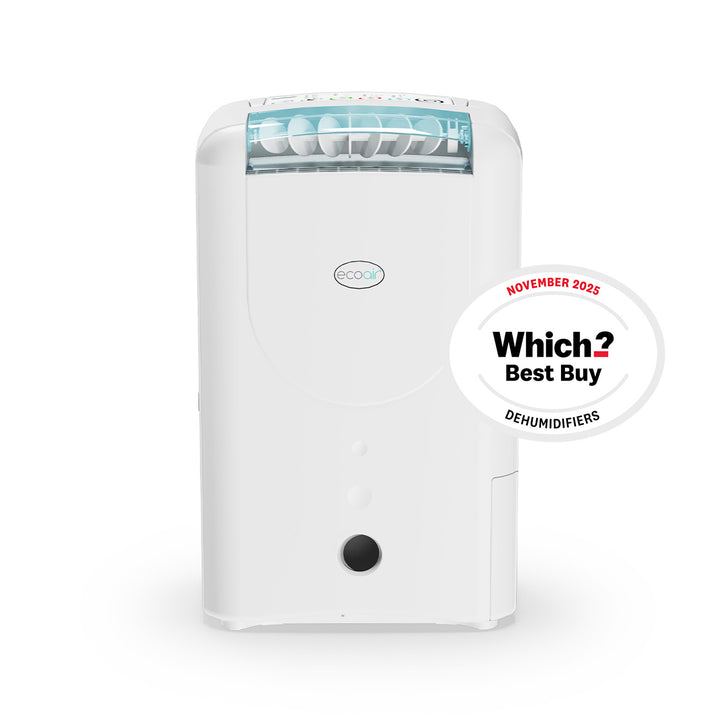
Great for everyday moisture control with automatic settings.
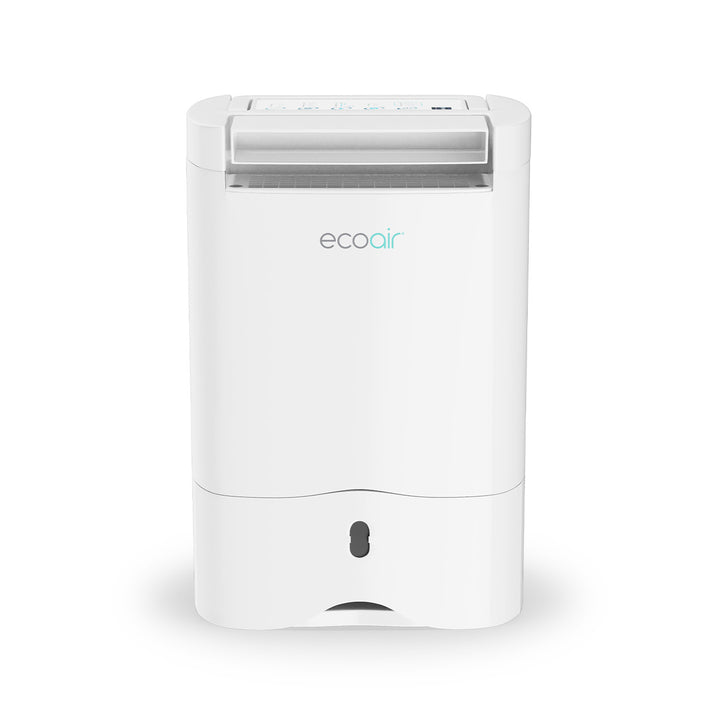
A slimline option for larger rooms and laundry drying.
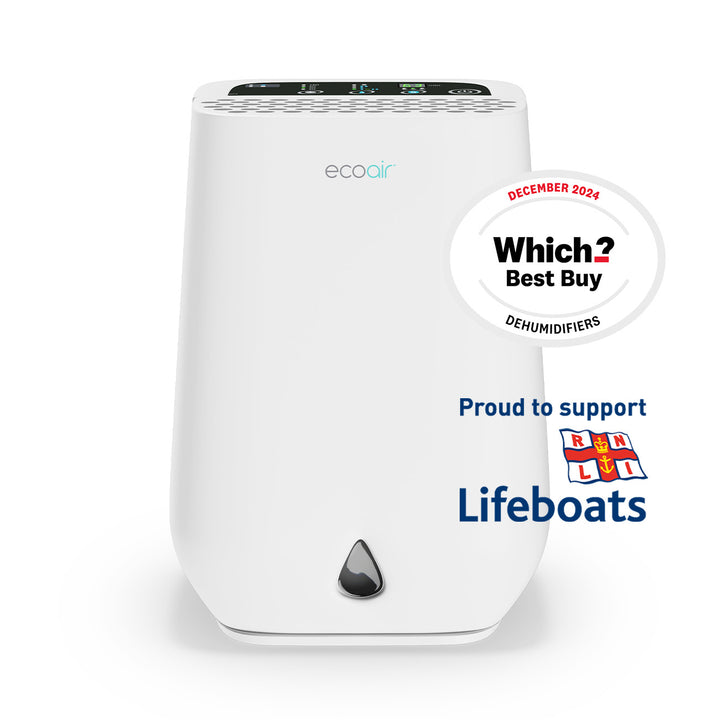
More extraction capacity and a generous water tank.
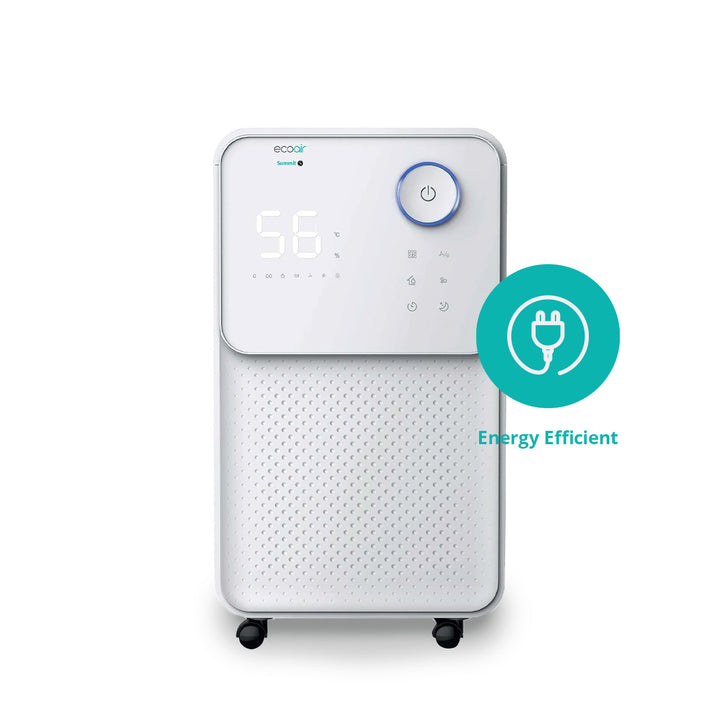
A compressor option for appropriately warm spaces.
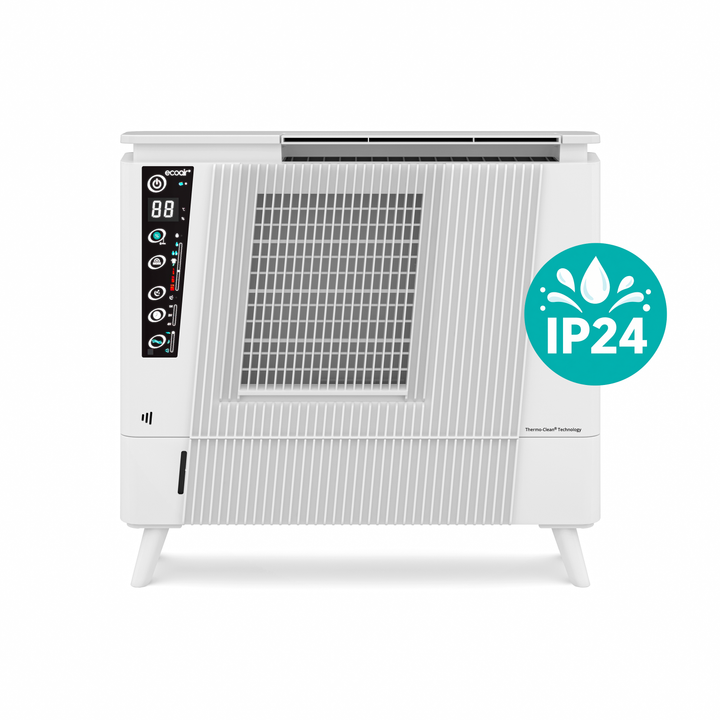
IP24-rated model offering wall-mounting flexibility.
Product images, prices and links are sourced from your Shopify catalogue where available. Displayed capacity figures are indicative published ratings measured under each model's specified conditions. Availability and prices may change.
Useful answers to the questions people often ask before purchasing a dehumidifier.
Around 40–60% relative humidity is a common comfort range. The best target depends on the room, outdoor conditions and whether you are experiencing condensation.
Often, yes—especially if the room is unheated or frequently below roughly 15°C. A compressor model may be a good choice for a warmer room; always check the specific model's operating range.
No. The tank determines how much water is stored before you empty it. Extraction capacity and real room conditions determine how quickly moisture is removed.
Yes. A model with a dedicated laundry mode can help remove moisture released by drying clothes. Follow the appliance guidance and keep laundry clear of the air intake and outlet.
A dehumidifier can help control excess airborne moisture, but it does not repair roof leaks, plumbing issues, rising damp or other building defects. Those causes also need attention.
Compare the full range, use the Product Finder on our dehumidifiers collection page, or get in touch with the EcoAir team for help.